
Enseignants invités (2017-2027) |
Enseignants invités en 2025
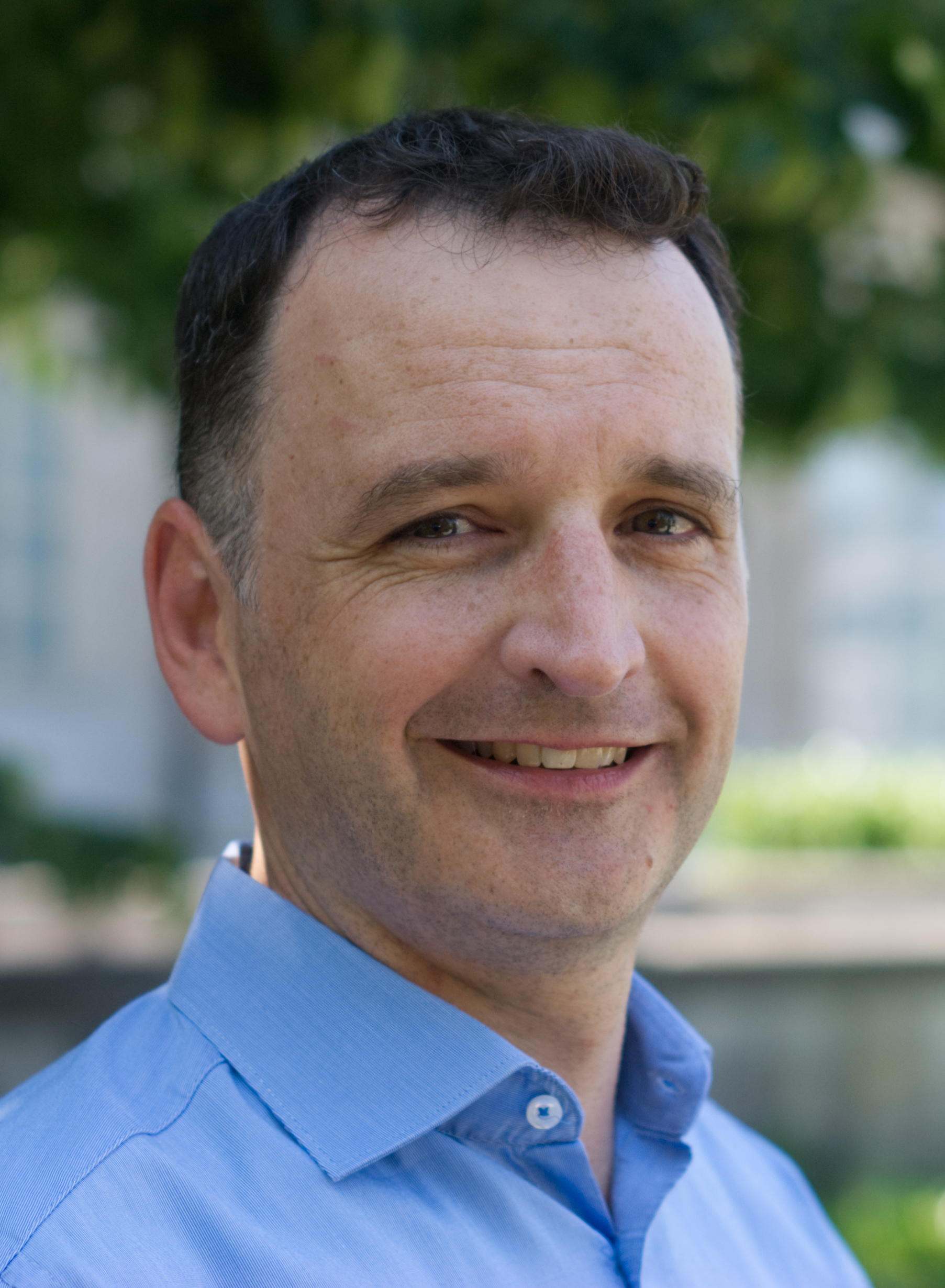
Martin Dusinberre
Coordonnées professionnelles
Université de Zürich
Historisches Seminar
Karl Schmid-Strasse 4
Office KO2 F 167
CH-8006 Zürich
Allemagne
Présentation
Martin Dusinberre, invité à l'EHESS par Pablo Blitstein (GEHM), est professeur et titulaire de la chaire d'histoire globale à l'université de Zurich. Il est l'auteur de Mooring the Global Archive : A Japanese Ship and its Migrant Histories (Cambridge, 2023), et de Hard Times in the Hometown : A History of Community Survival in Modern Japan (Hawai'i, 2012). Il a codirigé des dossiers de revue pour The Historical Journal (sur les utilisations est-asiatiques du passé européen, 2021), Historische Anthropologie (sur la transplantation et la production de sucre dans le Pacifique japonais, 2019) et The Journal of Global History (sur les navires à vapeur et le transit, 2016).
Depuis 2020, il fait partie du comité de rédaction de Past & Present. Parallèlement à ses recherches sur les histoires de la migration, de l'empire et du monde maritime, il s'intéresse aux formes expérimentales d'écriture et performance historique. Il est codirecteur du département d'histoire depuis 2021 et développe actuellement un nouveau projet sur les migrants japonais en Australie.
Conférences
Dans le cadre du séminaire de Nicolas Barreyre, Yann Philippe, Tamara Boussac et Sara Le Menestrel, Nouvelles recherches nord-américanistes : séminaire du CENA (EHESS),
When was a Migrant a Settler Colonial? Japanese Sugar Plantation Labourers and the Dispossession of Native Hawaiians
- Lundi 20 janvier 2025 de 14h à 16h
- Campus Condorcet-Bâtiment EHESS
(Salle A427) - 2 cours des humanités 93300 Aubervilliers
A simplified model of settler colonialism posits a binary between the “settler” and the “native”—the former more often than not a Caucasian, Euro-American actor, and the latter an Indigenous person whose land is in the process of being illegally claimed. In the last decade or so, however, scholars of Asian migration across the Indian and Pacific Oceans have challenged this binary by focusing on the history of migrant labourers. Japan offers a particularly interesting articulation of this triangulation of “settler”, “native” and “migrant” actors due to the heterogeneity of its emigration histories, with some migrants crossing to work in the nascent Northeast Asian colonies of the Japanese empire, and others carving out new lives in colonial polities controlled by other imperial powers. Focusing on the case of Japanese plantation workers in what was first the Kingdom and then later the colony of Hawai‘i (that is, either side of the overthrow of the Hawaiian monarchy in 1893), this lecture will examine the extent to which individual Japanese migrants were complicit in US settler colonialism and thereby in the dispossession of Native Hawaiians from their land. What does the Japanese case reveal about the fluidity of the terms “settler” or indeed “land” in the settler colonialism model, and what is the wider significance of the Japanese case for a historical understanding of colonial power in the Pacific world?
Dans le cadre du séminaire du GEHM, Historiographies modernes : histoire, écritures, temporalités,
Authorial Metadata and the Global History Archive: of Trips, Traps and Tricks
- Jeudi 23 janvier 2025 de 11h à 13h
- EHESS (Salle A4_47)
54, boulevard Raspail - 75006 PAris
For many historians of a certain age and training, reflexivity and self-critique are approaches to be avoided in the writing of historical texts. This was partly because the use of the first-person voice was seen to be unprofessional and undermining of history’s claim to be a universal, impartial discipline; and partly because it was assumed that readers were uninterested in the tricks of the historical trade. But the turn towards global history not just as a topic of study but as a new methodology challenges this disciplinary presumption. In my 2023 monograph, Mooring the Global Archive, I suggest that “the archive” as the holy grail of historical research forces scholars to confront new methodological and epistemological questions. Unlike local archives for local histories and national archives for national histories, there is no obvious physical location for a “global” archive, no given site from which to start. Thus, the global archive must by its very nature derive from the imaginative powers of the historian—by the way they bring individual collections and landscapes into dialogue with each other and simultaneously understand the silences thereby generated. In turn, the very subjectivity of this endeavour demands a greater transparency from the scholar in terms of acknowledging their blind spots and their errors: that is, the archival traps into which we all inevitably fall and from which we try to extricate ourselves. How we address such questions of positionality—or what I call “authorial metadata”—in the writing of history, and what is at stake in these debates, will be the main themes of this lecture.
Dans le cadre du séminaire de Pablo Blitstein, De l’Asie au Pacifique : penser le globe depuis la Chine, XIX-XX siècles
Land, Sea and Hunger: A Japanese-Aboriginal Encounter in 1893
- Vendredi 24 janvier 2025 de 14h30 à 16h30
- Campus Condorcet-Centre de colloques
(Salle 3.07 ) Place du Front popuilaire 93300 Aubervilliers
This lecture will begin with an apparently typical mode of global microhistory storytelling: in 1893, two Japanese bêche-de-mer fishermen were murdered by some Aboriginal men off the coast of northern Queensland. The Japanese government, keen to flaunt its “civilized” status and simultaneously to probe the seriousness of Euro-American claims to advanced civilization, demanded justice; the British colonial government in Queensland delivered said civilization through an extrajudicial killing which it was then keen to cover up. Thus, this seems to be a story about settler/Aboriginal/immigrant tensions on a colonial borderland and the ways in which Japanese officials in Tokyo became complicit in the British empire’s dirty work in Australia. The problem is, I am dissatisfied with this mode of storytelling, privileging as it does a set of murders and the state actors—and their archives—who sought to set the case’s narrative agenda. What would it mean to approach the 1893 case from a different temporal, spatial and epistemological starting point, for example as a history not of killing but of physiological and spiritual hunger? How would a decentred authorial voice work in telling such a history, and how might our approach challenge the very notion of “global microhistory”? I cannot promise that the lecture will offer very good answers to these questions, but I hope that in raising them I can provoke a wider discussion about narrative modes at the interface of global history and Indigenous Studies.
Dans le cadre du séminaire de Pablo Blitstein et Clément Thibaud, Sorties d'empire entre l'Asie de l'Est et les Amériques, XIXe-XXe siècles,
Japan’s Expansionist Imagination and the Twentieth-Century “Pacific Age”
- Vendredi 7 février 2025 de 10h30 à 12h30
- Campus Condorcet-Centre de colloques
(Salle 3.09 ) Place du Front populaire 93300 Aubervilliers
As Japanese intellectuals grappled with new understandings of law, geopolitics and history in the decades following the 1868 Meiji Revolution, one trope emerged which promised both a different understanding of the pre-1868 past and of the twentieth-century future. This was the trope of “expansion”, one which explicitly drew on contemporary scholarship from Europe and North America (e.g. J. R. Seeley’s The Expansion of England, 1883) and which simultaneously positioned overseas Japanese migrants as the key actors of a “Greater Japan”. This lecture will explore one articulation of such expansionary thought in the years leading up to the first Sino-Japanese war (1894-5), an articulation which focused on redefining Meiji Japan’s temporal and spatial relationship to the Pacific Ocean. What did it mean to claim a new “age” (jidai) in world history, with Japan at its forefront? What was the significance of the Pacific world to Tokyo-based intellectuals, and how did their imagination differ from the realities experienced by transpacific migrants? And what might an examination of this discursive “Pacific Age” tell historians more generally about the instrumentalization of history in the late-nineteenth century and the East Asian uses of a European past?
Accueil et durée du séjour
-
Invité et accueilli à l'EHESS par Pablo Blitstein (GEHM)
-
Janvier-Février 2025 (1 mois)


EHESS-CNRS
CRH (UMR 8558)
54, boulevard Raspail
75006 Paris
Tél. : +33 (0)1 49 54 24 42
Direction du CRH :
Contact Presse : presse@ehess.fr
Dernière modification :
18/11/2026