
Projets de recherches en cours |
Programmes de recherches financés ou non (2023-2027)
ANR FIDOVI
Présentation
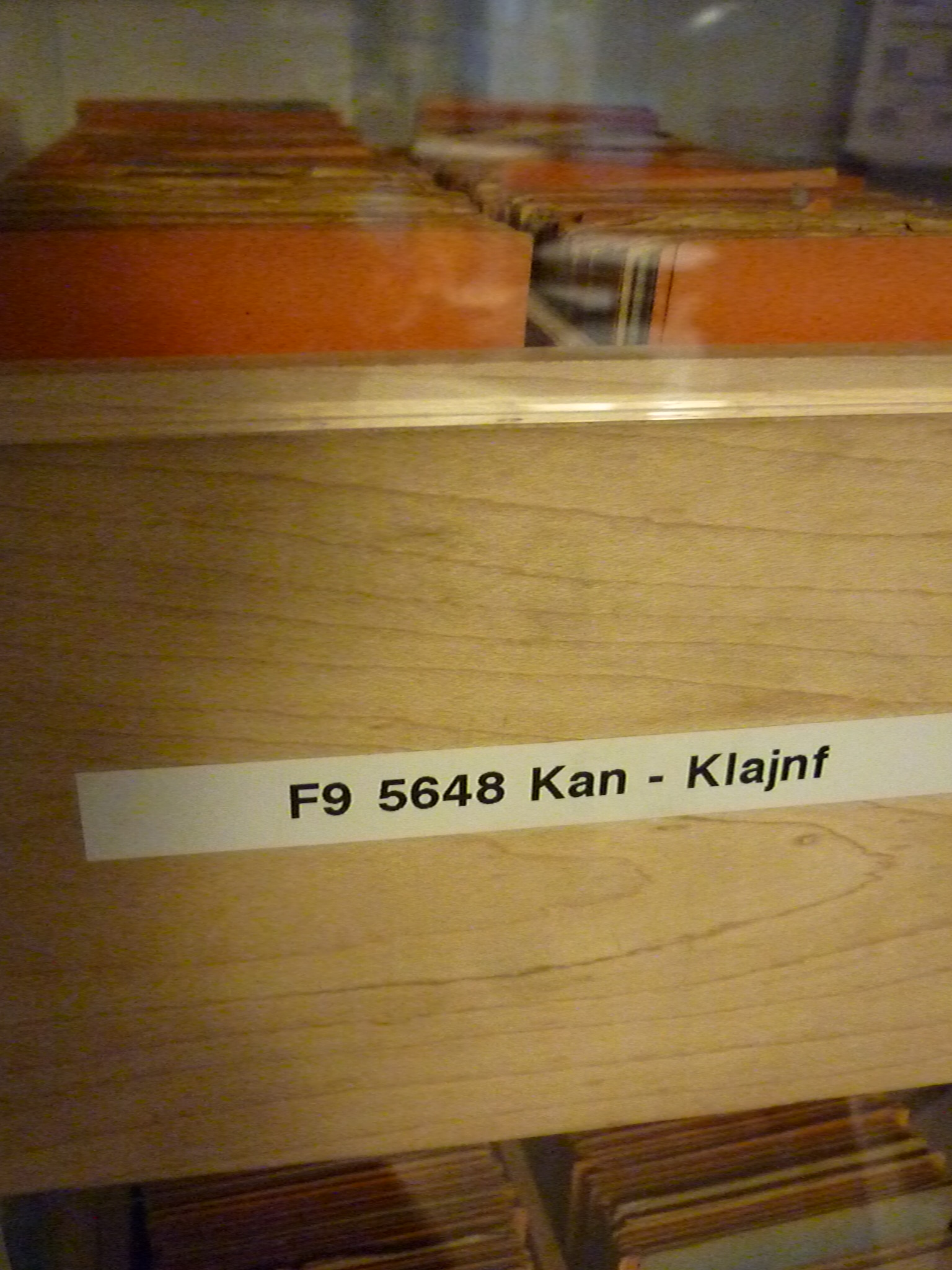
Le projet FIDOVI a pour ambition de répertorier et d’étudier, dans une perspective d’histoire administrative, politique, sociale et culturelle, des corpus inédits de dossiers et fichiers d’individus identifiés comme ennemis idéologiques et raciaux par le régime de Vichy entre 1940 et 1944.
L’objectif est de comprendre d’une part la vie administrative de ces ensembles documentaires sous l’Occupation (constitution, usage), d’autre part leur vie posthume jusqu’à nos jours, alors même que la question de leur mise à disposition du public et de leur mise en valeur scientifique revêt de puissants enjeux de mémoire individuelle et collective ; il s’agira donc aussi d’appréhender ces défis sociaux et scientifiques par une enquête orale auprès d’« égo-consultants » des archives publiques.
Trois cas seront étudiés ou revisités : les fichiers et registres de recensement des Juifs ; les dossiers et fichiers antimaçonniques ; les dossiers d’enfants juifs recueillis par les services de protection de l’enfance. Un corpus complémentaire sera étudié, le fichier central de police administrative de la Sûreté nationale, constitué entre 1940 et 1949, à partir d’une indexation qui permettra son exploitation scientifique.
Présentation (anglais)
Individual files and records in Vichy France: their life and afterlife (1940 to the present)
In order to contribute to the history of the genocidal and repressive inner workings of the French state, the FIDOVI research program, led by Antoine Rivière (coordinator), Laurent Joly, Anne Leblay-Kinoshita and Yann Potin, aims to list and study the personal files of individuals identified as ideological and racial enemies by the Vichy regime: census records on Jews, anti-Masonic files, files on Jewish children taken into custody by child protection services. Our objective is to understand how these documents were put together, and how they were used, from the Occupation period to the present day, when the issue of opening them to the public and to researchers is of major importance in terms of individual and collective memory.
Supported by two history research centers, the IHTP (Université Paris 8, CNRS) and the CRH (EHESS, CNRS), the Archives nationales (AN) and the Bibliothèque nationale de France, the project will bring together archivists and historians.
Combining case studies and a global approach, it will focus on three aspects. It will shift the focus of enquiry, from Paris to the regions, by identifying and studying new records in departmental archives, as well as at the Archives nationales d'outre-mer (ANOM) for colonial Algeria. We want to understand the administrative life of these records, by analyzing sources that have so far been neglected by researchers, and records that local census will help us identify. Finally, we want to understand their afterlife, by distinguishing between post-war administrative uses and uses for memorial purposes: reparation, commemoration, ego-history. Their consultation by the people concerned and their descendants will be the subject of an oral survey at the departmental archives, the ANOM and the AN.
In addition to the publication of scientific articles and conference proceedings, a guide to sources and a database of those involved in the registration process will be developed. The results will be shared with a wide audience through conferences, virtual exhibitions and a web documentary.
Séminaire 2025-2026
Partenaires et membres du projet et durée du projet
-
IHTP (UMR 8244, Université Paris 8 - CNRS) : Antoine Rivière (Université Paris 8, IHTP), coordinateur du projet, responsable scientifique pour l’Institut d’histoire du temps présent (UMR 8244), Aurore Duvoisin (doctorante, IHTP), Bénédicte Héraud (CNRS, IHTP), Malika Rahal (CNRS, IHTP)
-
CRH (UMR 8558, EHESS - CNRS) : Laurent Joly (CNRS, CRH), responsable scientifique pour le Centre de recherche historique (UMR 8558), Isabelle Backouche (EHESS, CRH), Maël Le Noc (post-doctorant associé, CRH)
-
Archives nationales : Yann Potin (AN), responsable scientifique pour les Archives Nationales, Violaine Challéat-Fonck (AN), Émilie Charrier (AN), Patricia Gillet (AN), Gabrielle Grosclaude (AN), Annick Pegeon (AN), Anne Leblay-Kinoshita (BnF), responsable scientifique pour la Bibliothèque nationale de France, Sylvie Bourel (BnF), Mathilde Dutertre (BnF)
-
Bibliothèque nationale de France : Anne Leblay-Kinoshita (responsable scientifique), Sylvie Bourel, Mathilde Dutertre
- Du 01/10/2024 au 30/09/2027


EHESS-CNRS
CRH (UMR 8558)
54, boulevard Raspail
75006 Paris
Tél. : +33 (0)1 49 54 24 42
Direction du CRH :
Contact Presse : presse@ehess.fr
Dernière modification :
18/11/2026