
Membres du CRH |
Membres statutaires
Caroline Mezger
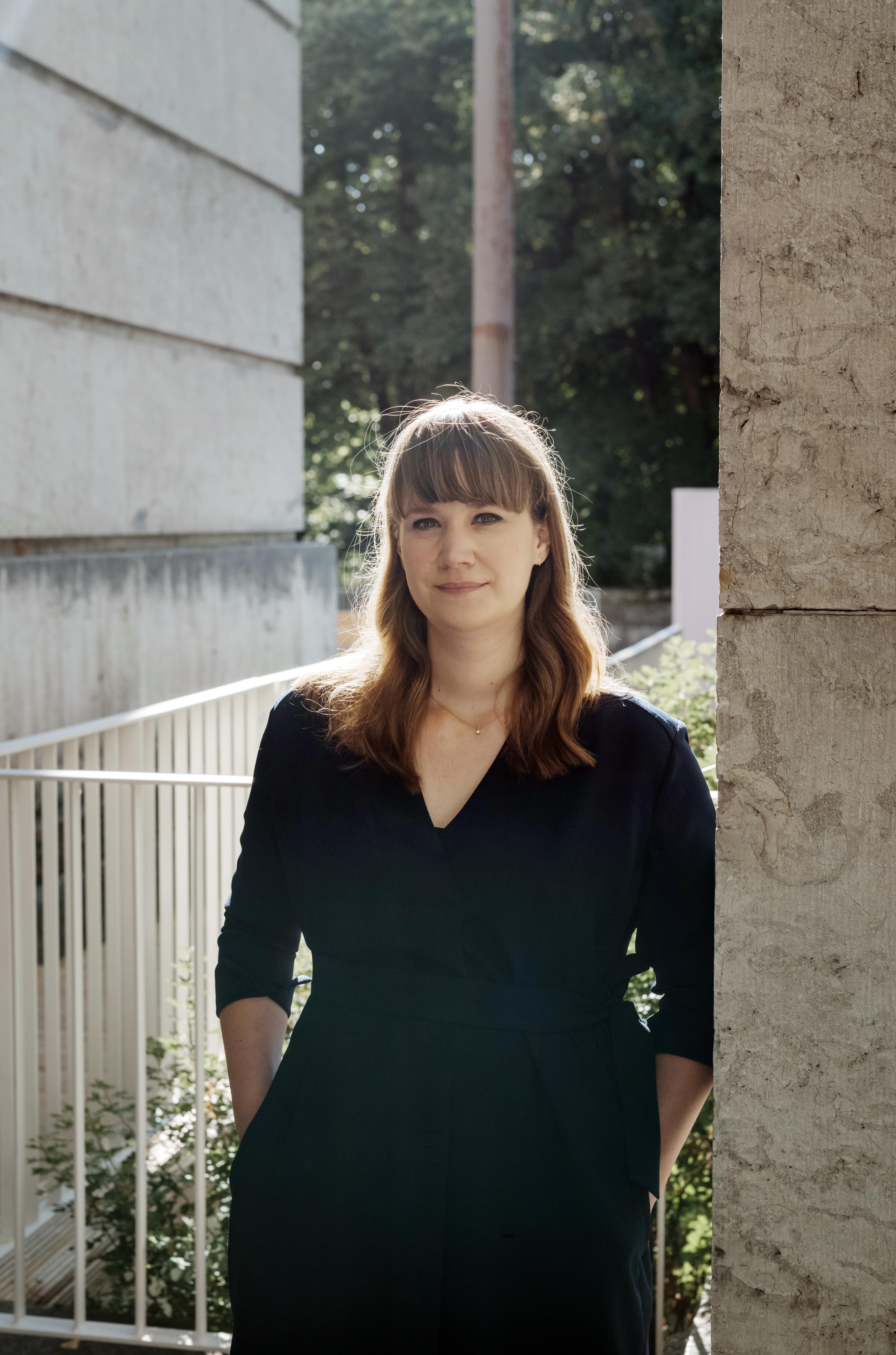
Coordonnées professionnelles
EHESS-CRH
HHS-GEHM
54, boulevard Raspail
75006 Paris
01 49 54 24 81
Présentation
Caroline Mezger a rejoint le CRH en tant que maîtresse de conférences en septembre 2025. Ses travaux portent sur le nazisme, la Seconde Guerre mondiale et la Shoah dans une perspective transnationale et comparative, des sujets qu’elle analyse en lien avec les migrations forcées, les études sur le nationalisme et les régions frontalières, l’histoire orale et les études sur la mémoire, l’histoire de l'enfance et de la jeunesse et l’histoire de la communication.
Avant son arrivée à l’École, Caroline Mezger a travaillé à l'Institut d'histoire contemporaine (IfZ) de Munich, où elle a dirigé le projet de recherche international et interdisciplinaire „‚Man hört, man spricht’: Informal Communication and Information ‚From Below' in Nazi Europe“. Elle a également été chercheuse postdoctorale au Centre d’études sur la Shoah de l'IfZ, où elle a co-fondé la revue European Holocaust Studies. Elle a enseigné à l'université Ludwig-Maximilian de Munich et à l'université de la Bundeswehr à Munich.
Mezger est titulaire d’une licence en histoire de l'université de Yale et d’un master de l'université d'Europe centrale (Budapest), ainsi que docteure de l'Institut universitaire européen (Florence). Elle a obtenu de nombreuses bourses, notamment de l'Institut historique allemand de Paris et du Davis Center for Historical Studies de l'université de Princeton. Sa première monographie, Forging Germans: Youth, Nation, and the National Socialist Mobilization of Ethnic Germans in Yugoslavia, 1918–1944, a été publié en 2020 par Oxford University Press. Ses travaux présents saisissent le phénomène de la rumeur pour écrire une histoire enchevêtrée de la migration forcée sous le nazisme.
(Photo de : Maria Irl.)
Groupes de recherche
Thèmes de recherches
-
Le nazisme, la Seconde Guerre mondiale et la Shoah dans une perspective transnationale et comparative ;
-
Les migrations forcées, les études sur le nationalisme et les régions frontalières ;
-
L’histoire orale ;
-
L’histoire de l’enfance et de la jeunesse ;
-
La communication (informelle).
Formation
2016: Doctorat en histoire, Institut universitaire européen (IUE), Florence.
2012: Master en histoire comparative de l’Europe centrale, de l’Est et du Sud-Est, 1500–2000, Central European University (CEU), Budapest.
2010: Licence d’histoire, Yale University, New Haven CT, États-Unis.
Principales expériences professionnelles
-
2019–2025: Responsable scientifique (Principal Investigator) du projet Leibniz Junior Research Group « ‘Man hört, man spricht’: Informal Communication and Information ‘From Below’ in Nazi Europe » (INFOCOM), Institut für Zeitgeschichte (IfZ), Munich.
-
2022–2025: Chargée de cours en histoire contemporaine, Ludwig-Maximilians-Universität München (LMU).
-
2020–2022: Chargée de cours, programme « Studium Plus », Universität der Bundeswehr München.
-
2017–2019: Chercheuse contractuelle, Centre d’études sur la Shoah, IfZ.
-
2017–2019: Membre du comité de rédaction, European Holocaust Studies.
-
2014: Doctorante invitée, Institut für Geschichtswissenschaften, Humboldt-Universität zu Berlin.
Distinctions
(Sélection)
-
Lauréate du programme « Beste Köpfe » Junior Research Group, Leibniz-Gemeinschaft, pour le projet « ‘Man hört, man spricht’: Informal Communication and Information ‘From Below’ in Nazi Europe » (INFOCOM) (2019–2026)
-
Fellow, Shelby Cullom Davis Center for Historical Studies, Princeton University (2025)
-
Bourse de recherche postdoctorale en histoire de la migration, University of California, Berkeley, Institute of European Studies et German Historical Institute Washington/Pacific Regional Office (2022–2023, déclinée)
-
Bourse « Karl-Ferdinand-Werner », Institut historique allemand de Paris (2019)
-
Bourse doctorale du Secrétariat d’État à la formation, à la recherche et à l’innovation, Confédération Suisse (2012–2016)
-
Bourse de recherche, Institut für deutsche Kultur und Geschichte Südosteuropas, Munich (2011)
-
Prix d’excellence, CEU (2011, 2012)
-
Phi Beta Kappa, Yale University (2010)
-
Prix « Andrew D. White » en histoire européenne, Yale University (2010)
Enseignements 2026-2027
Publications
Ouvrages
-
Forging Germans: Youth, Nation, and the National Socialist Mobilization of Ethnic Germans in Yugoslavia (1918–1944), Oxford, Oxford University Press, 2020.
Ouvrages collectifs et numéros spéciaux dirigés
-
(avec Gaëlle Fisher) « The Holocaust in the Borderlands: Interethnic Relations and the Dynamics of Violence in Occupied Eastern Europe », no thématique, European Holocaust Studies 2, 2019.
Articles dans des revues à comité de lecture
-
« Rumor and Displacement: Informal Communication, Propaganda, and the 1939 ‘Option’ in South Tyrol », The Journal of Modern History, 96-1, 2024, p. 119-159.
-
« From Hitler’s Disciple to Wartime Refugee: Donauschwaben World War II Childhoods and the Crossroads of Historical Agency », East Central Europe, 48-1, 2021, p. 50-72, https://doi.org/10.30965/18763308-48010008.
-
« The 1944 Crvenka Massacre and the Potentials of Postwar Testimony », Holocaust Studies: A Journal of Culture and History, 26-4, 2019, p. 417-441.
-
(avec Gaëlle Fisher) « Introduction – The Holocaust in the Borderlands: Interethnic Relations and the Dynamics of Violence in Occupied Eastern Europe », European Holocaust Studies, 2, 2019, p. 9-34.
-
« Entangled Utopias: The Nazi Mobilization of Ethnic German Youths in the Batschka, 1930s-1944 », Journal of the History of Childhood and Youth, 9-1, 2016, p. 87-117.
Contributions à des ouvrages collectifs
-
« Zwischen Habsburgermonarchie und Nationalsozialismus: Donauschwäbische Minderheitenschulen im 19. und 20. Jahrhundert » [Entre la monarchie de Habsbourg et la domination nazie : les écoles des minorités souabes du Danube au XIXe et XXe siècle], in Rainer Bendel (dir.), Die mittel-osteuropäischen Nationalstaaten nach 1918: Transformationen nach dem Zusammenbruch der Kaisserreiche, Münster, LIT-Verlag, 2019, p. 217-262.
-
« Vom Hitler-Anhänger zum Kriegsflüchtling: Donauschwäbische Kindheitserfahrungen und die Scheidewege der historischen Handlungsfähigkeit » [De disciple de Hitler à réfugié de guerre : les expériences des enfants Souabes du Danube et le carrefour de l’agentivité historique], in Francesca Weil, André Postert et Alfons Kenkmann (dir.), Kindheiten im Zweiten Weltkrieg, Halle (Saale), Mitteldeutscher Verlag, 2018, p. 297-317.
-
« ‘Denn du bist die Zukunft deines Volkes’: Youth, Nation, and the Nazi Mobilization of Southeastern Europe’s Donauschwaben, 1930s–1944 », in Burkhard Olschowsky et Ingo Loose (dir.), Nationalsozialismus und Regionalbewusstsein im östlichen Europa. Ideologie, Machtausbau, Beharrung, Munich, De Gruyter Oldenbourg, 2016, p. 105-126.
Articles présentant des projets
-
« Rumors of the Holocaust: Expressing an Unspeakable Knowledge », History of Knowledge, 2025..
-
« Informelle Kommunikation im nationalsozialistischen Europa: Vigilanz, Unsicherheit und die Aushandlung gesellschaftlicher Wahrheiten, 1939-1945 », Mitteilungen, 5-2, 2024, p. 10–19.
-
« “‘Man hört, man spricht’: Informal Communication and Information ‘From Below’ in Nazi Europe” (INFOCOM) – Ein neues Forschungsprojekt des Instituts für Zeitgeschichte », Vierteljahrshefte für Zeitgeschichte, 68-3, 2020, p. 481–490.
Comptes-rendus
-
Compte-rendu (en anglais) de Rebecca Clifford, Survivors: Children’s Lives After the Holocaust, dans The American Historical Review, 129-1, 2024, p. 328–330, https://doi.org/10.1093/ahr/rhad582.
-
Compte-rendu (en anglais) de Bernd Robionek, Ethnische Ökonomie im politischen Spannungsfeld. Das deutsche Genossenschaftswesen in der Vojvodina (1922–41), dans Central European History, 54-2, 2021, p. 399–402, https://doi.org/10.1017/S0008938921000716.
-
Compte-rendu (en anglais) de Nathan N. Orgill, Rumors of the Great War: The British Press and Anglo-German Relations during the July Crisis, Francia-Recensio, 2021-1, http://dx.doi.org/10.11588/frrec.2021.1.80278.
-
Compte-rendu (en anglais) de Ernö Munkácsi, How It Happened. Documenting the Tragedy of Hungarian Jewry, éd. par Nina Munk, dans History: The Journal of the Historical Association, 105-365, 2020, p. 359–361, https://doi.org/10.1111/1468-229X.12958.
-
Compte-rendu (en français, trad. Irène Favier) de Sandrine Kott and Kiran Klaus Patel (dir.), Nazism Across Borders. The Social Policies of the Third Reich and their Global Appeal, dans 20 & 21. Revue d’histoire, 146-2, 2020, p. 215–216, https://doi.org/10.3917/vin.146.0193.
-
Compte-rendu (en anglais) de Mirna Zakić, Ethnic Germans and National Socialism in Yugoslavia in World War II, dans The Journal of Modern History, 90-3, 2018, p. 739–740, https://doi.org/10.1086/698807.
-
Compte-rendu (en anglais) de Waitman Wade Beorn, The Holocaust in Eastern Europe: At the Epicenter of the Final Solution, dans German History, 69, 2018, https://doi.org/10.1093/gerhis/ghy069.
-
Compte-rendu (en allemand) de Claire Zalc et Tal Bruttmann (dir.), Microhistories of the Holocaust, dans Francia-Recensio, 2017-3, https://doi.org/10.11588/frrec.2017.3.41525.
-
Compte-rendu (en anglais) de Stephanie Bird, Mary Fulbrook, Julia Wagner et Christiane Wienand (dir.), Reverberations of Nazi Violence in Germany and Beyond: Disturbing Pasts, dans European Review of History, 24-3, 2017, p. 487–489, https://doi.org/10.1080/13507486.2017.1283818.
-
Compte-rendu (en anglais) de Philipp Ther, The Dark Side of Nation-States: Ethnic Cleansing in Modern Europe, European Review of History, 23-1/2, 2016, p. 256–258, https://doi.org/10.1080/13507486.2015.1100939.
-
Compte-rendu (en anglais) Ioannis Stefanidis, Substitute for Power: Wartime British Propaganda to the Balkans, 1939-1944, dans European Review of History, 21-1, 2014, p. 137–139, https://doi.org/10.1080/13507486.2013.871936.
Divers
-
« Workshop Report: Informal Communication in Occupied Societies », Occupation Studies Research Network Blog, 9 janvier 2023, https://fasos-research.nl/occupationstudies/workshop- report-informal-communication-in-occupied-societies/.
-
Rapport du colloque « Raub jüdischen Eigentums in Jugoslawien 1940–1945 », Berlin, 8 février 2019, H-Soz-Kult, 14 mars 2019, www.hsozkult.de/conferencereport/id/tagungsberichte-8175.
-
Rapport du Historikertag 2018, section « The Politics of Citizenship: Enemy Aliens, Citizenship Classification, and the Division of Societies in Twentieth-Century Germany, the Netherlands, and Europe », avec Gaëlle Fisher, H-Soz-Kult, 21 décembre 2018 : www.hsozkult.de/conferencereport/id/tagungsberichte-8020.
-
« 70 Years of the Historical Archive Zrenjanin », dans Filip Krčmar (dir.) СПОМЕНИЦА ИСТОРИЈСКОГ АРХИВА ЗРЕЊАНИН 1947–2017 [En souvenir des Archives historiques de Zrenjanin”], Zrenjanin, Archives historiques de Zrenjanin, 2017, p. 379–380.
Valorisation de la recherche
Radio
-
Entretien avec Kristel le Pollotec pour Radio France Culture, « Hiver 43, la victoire change de camp », épisode 1: « Occupations et résistances » (23 janvier 2023), https://www.radiofrance.fr/franceculture/podcasts/lsd‑la‑serie‑documentaire/occupations‑et‑resistances‑6052704et épisode 4: « La Shoah » (26 janvier 2023), https://www.radiofrance.fr/franceculture/podcasts/lsd-la-serie-documentaire/la-shoah-8901551.
-
Entretient avec Jill Massino à propos de Forging Germans pour le New Books Network, podcast (28 mars 2022), https://newbooksnetwork.com/forging-germans.
-
Entretien avec Lucija Balikić, « Youth and the Politicization of Germanness in Interwar Yugoslavia », The Review of Democracy, CEU Democracy Institute, podcast (18 mars 2022), https://revdem.ceu.edu/2022/03/18/youth-and-the-politicization-of-germanness-in-interwar-yugoslavia/.
Presse
-
À propos de Forging Germans, The Page 99 Test, blog par Marshal Zeringue de The Campaign for the American Reader (2 juin 2020), http://page99test.blogspot.com/2020/06/caroline-mezgers-forging-germans.html.
-
« Reiner Frigyes Park: A Reflection on Current Events in Hungary », Baltic Worlds, 11-4, 2018, p. 34–36, https://balticworlds.com/reiner-frigyes-park/.
Document(s) à télécharger


EHESS-CNRS
CRH (UMR 8558)
54, boulevard Raspail
75006 Paris
Tél. : +33 (0)1 49 54 24 42
Direction du CRH :
Contact Presse : presse@ehess.fr
Dernière modification :
18/11/2026