
Projets de recherches en cours |
Programmes de recherches financés ou non (2023-2027)
ANR-DFG H-Diaries
Présentation
« H-Diaries. Premiers témoignages de la Shoah écrits par les victimes juives : Enquête, inventaire, cartographie » est un programme de recherche franco-allemand ANR-DFG, porté par Judith Lyon-Caen (EHESS-CRH, GRIHL-HHS), Andrea Löw (Institut für Zeitgeschichte, Centre d’études sur l’Holocauste), Sarah Gruszka (EHESS-CRH, associée à la Chaire d’excellence « Shoah et entreprises génocidaires », au CERCEC (EHESS) et à l’UMR Eur’orbem - Sorbonne Université / CNRS), Marie Moutier-Bitan (Chaire d’excellence « Shoah et entreprises génocidaires », Université de Caen-ERLIS, EHESS-CERCEC), Juliane Niklas (IfZ), Cécile Rousselet (EHESS-CRH, associée Sorbonne Nouvelle/CERC et Sorbonne Université/Eur’Orbem), Stefan Leicht (IfZ), ainsi que Michael Pilarski (IfZ), en charge du soutien technique.
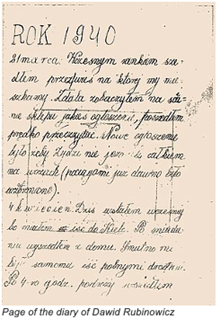
Il réunit des historiennes françaises et allemandes sur un sujet commun : les journaux de victimes juives rédigés durant la Shoah. Ces journaux comptent en effet parmi les témoignages personnels les plus éloquents de cette période, et constituent depuis des décennies des sources centrales pour des chercheuses et chercheurs issus de diverses disciplines. Pourtant, sauf rares exceptions, ils ont rarement été étudiés comme des objets autonomes à part entière. Rédigés dans le secret et dans des circonstances mettant la vie de leurs auteurs en danger, dissimulés ou sortis clandestinement des camps et des ghettos, ces journaux ont bien souvent survécu à leurs auteurs. Ils témoignent d’un besoin existentiel de laisser une trace, même lorsque le langage ne suffit plus à rendre compte de l’événement. Leur valeur scientifique ne réside pas – ou pas seulement – dans leur fonction de source pour la reconstitution des faits, mais dans leur capacité à faire apparaître des perceptions subjectives, des stratégies narratives, des formes individuelles de résistance psychique face à la persécution et à l’extermination.
H-Diaries se propose d’étudier ces textes selon des perspectives variées (histoire des savoirs, espaces, matérialités, trajectoires) et des méthodes croisées (inventaire, cartographie, histoire de l’écrit, anthropologie de l’écriture, micro-analyse), selon une approche transdisciplinaire (histoire, études juives, études littéraires, philologie, géographie, études des cultures matérielles). L’ensemble de ces journaux personnels formera un corpus à partir duquel il sera possible d’explorer l’histoire de la Shoah de manière globale et comparative, tout en contribuant aux réflexions sur les pratiques d’écriture face aux violences de masse.
Le projet poursuit trois objectifs principaux, étroitement liés :
-
Établir un inventaire raisonné d’un vaste ensemble d’écrits pouvant être considérés comme des journaux personnels de victimes juives de la Shoah. Ce travail d’identification, conçu en étroite collaboration avec les archivistes de différentes institutions, aboutira à la création d’une base de données numérique, destinée à un usage à la fois scientifique et pédagogique.
-
Cartographier les informations relatives aux journaux personnels. La localisation temporelle et spatiale des journaux, à l’aide de méthodes de cartographie numérique, permettra de représenter et de comparer les trajectoires des diaristes. Ces visualisations géocodées rendront visibles les sphères d’expérience individuelles, permettront de suivre les évolutions dans le temps, et offriront des possibilités d’analyses comparatives (en passant de la micro-analyse à l'échelle macro) pour la communauté scientifique internationale et le monde de l’enseignement (par exemple, pour localiser les journaux et accéder rapidement à des informations fiables).
-
Développer une approche de l’histoire de la Shoah par les journaux personnels, une analyse historique réflexive de ces écrits dans une perspective interdisciplinaire, croisant les dimensions textuelle, biographique, matérielle, spatiale et historiographique, afin de souligner leur apport à notre connaissance de la Shoah.
Durée du projet
2 juin 2025 au 31 mai 2028 (3 ans)
Principaux centres d’archives consultés
Mémorial de la Shoah de Paris ; United States Holocaust Memorial Museum ; Yad Vashem ; Ghetto Fighters House ; Institut historique juif de Varsovie ; Musée juif de Berlin ; Institut du Temps présent de Munich (IfZ).
Site de référence : https://shoahdiaries.hypotheses.org/
* * *
Presentation
H-Diaries. Early Holocaust Testimonies Written by Jewish Victims: Investigation, Inventory, Mapping is a Franco-German research program (ANR-DFG), led by Andrea Löw (Institut für Zeitgeschichte, Center for Holocaust Studies), Judith Lyon-Caen (EHESS-CRH, GRIHL-HHS), Sarah Gruszka (EHESS-CRH, affiliated with the Chair of Excellence “Holocaust and Genocide Studies”/University of Caen, the CERCEC (EHESS), and the UMR Eur’orbem – Sorbonne University / CNRS), Marie Moutier-Bitan (Chair of Excellence “Holocaust and Genocide Studies,” University of Caen–ERLIS, EHESS–CERCEC), Juliane Niklas (IfZ), Cécile Rousselet (EHESS-CRH, affiliated with Sorbonne Nouvelle/CERC and Sorbonne University/Eur’Orbem), Stefan Leicht (IfZ), as well as Michael Pilarski (IfZ) for technical support.
The project brings together French and German historians around a shared topic: diaries written by Jewish victims during the Holocaust. Indeed, diaries written by Jewish victims of the Holocaust are among the most powerful personal testimonies of that period and have served as central sources for scholars from various disciplines for decades. Yet, with few exceptions, they have rarely been studied as independent objects in their own right. Composed in secret under life-threatening circumstances, hidden away, and smuggled out of camps and ghettos, these diaries often outlived their authors. They reflect an existential need to bear witness, even when language offered limited means to adequately express the events being recorded. Their scholarly value does not lie – or at least, does not solely lie – in their function as sources for reconstructing historical events, but rather in their capacity to reveal subjective perceptions, narrative strategies, and individual coping mechanisms amid persecution and extermination.
H-Diaries study these texts from a variety of perspectives (history of knowledge, spatial analysis, materiality, life trajectories) and through numerous methods (inventory, cartography, history of writing, anthropology of writing, microanalysis), in a transdisciplinary approach (History, Jewish Studies, Literary Studies, Philology, Georgaphy, Material Culture Studies). Together, the personal diaries will form a corpus through which the history of the Holocaust can be explored in a global and comparative way, while also contributing to broader reflections on writing practices in the face of mass violence.
The project has three main interrelated objectives:
-
To establish a comprehensive, critical inventory of a wide range of texts that can be considered personal diaries written by Jewish victims of the Holocaust. This work of identification, that is conducted in close collaboration with archivists from various institutions, will result in a digital database that will be accessible for both research and teaching purposes.
-
To map the information related to these personal diaries. Temporal and spatial localization of the diaries using digital mapping methods will help visualize and compare the trajectories of the diarists. The geocoded visualizations will make individual spheres of experience visible, allow for the tracing of diachronic developments, and facilitate comparative analyses —moving from microanalysis to a macro scale— for the international scholarly community and educators (e.g., to locate the diaries and access reliable, curated data).
-
To develop a research approach to the Holocaust through personal diaries, producing a reflective historical analysis of these writings by considering them through an interdisciplinary examination from textual, biographical, material, spatial, and historiographical perspectives. The aim is to highlight their unique contribution to our understanding of the Holocaust.
Project duration
June 2, 2025 – May 31, 2028 (3 years)
Main archival centers consulted
Mémorial de la Shoah (Paris); United States Holocaust Memorial Museum; Yad Vashem; Ghetto Fighters House; Jewish Historical Institute (Warsaw); Jewish Museum Berlin; Institut für Zeitgeschichte (Munich).


EHESS-CNRS
CRH (UMR 8558)
54, boulevard Raspail
75006 Paris
Tél. : +33 (0)1 49 54 24 42
Direction du CRH :
Contact Presse : presse@ehess.fr
Dernière modification :
18/11/2026